
Why Every little thing You Find out about What Is Hypertonic Saline Is…
페이지 정보
작성자 Siobhan 작성일26-05-31 17:28 조회59회 댓글0건관련링크
본문
 Infants who acquired hypertonic saline may even have decrease postinhalation clinical scores than infants who acquired regular saline in the first three days of treatment (day 1: MD −0.64, 95% CI −1.08 to −0.21; 10 trials (1 outpatient, 1 ED, 8 inpatient trials), 893 infants; day 2: MD −1.07, 95% CI −1.60 to −0.53; 10 trials (1 outpatient, 1 ED, eight inpatient trials), 907 infants; day 3: MD −0.89, 95% CI −1.Forty four to −0.34; 10 trials (1 outpatient, 9 inpatient trials), 785 infants; low-certainty evidence). Infants who received hypertonic saline could even have decrease postinhalation clinical scores than infants who received normal saline in the primary three days of treatment (day 1: MD −0.64, 95% CI −1.08 to −0.21; 10 trials (1 outpatient, 1 ED, 8 inpatient trials), 893 infants; day 2: MD −1.07, 95% CI −1.60 to −0.53; 10 trials (1 outpatient, 1 ED, 8 inpatient trials), 907 infants; day 3: MD −0.89, 95% CI −1.44 to −0.34; 10 trials (1 outpatient, 9 inpatient trials), 785 infants; low-certainty evidence).
Drops and sprays have low danger of complications when used as directed, although pressurized sprays may be too forceful for infants and hypertonic solutions could cause stinging. Saline sprays use a pressurized or pump mechanism to create a mist or stream that coats the nasal lining; they are common for adults and older kids and are helpful for fast relief of congestion or to loosen mucus. Hypertonic saline (a strong, or extremely concentrated, sterile salt water answer) breathed in as a high-quality mist utilizing a nebuliser could help relieve wheezing and respiration difficulty. Isotonic solutions (roughly the identical salt concentration as bodily tissues) are gentle for every day upkeep, while hypertonic solutions (higher salt focus) can draw out fluid and reduce swelling however may be extra irritating, particularly for delicate customers. Nebulised hypertonic saline may scale back the risk of hospitalisation by 13% compared with nebulised normal saline amongst infants who have been outpatients and those handled in the ED (danger ratio (RR) 0.87, 95% CI 0.78 to 0.97; Eight trials, 1760 infants; low-certainty proof).
Twenty-seven trials introduced safety information: 14 trials (1624 infants; 767 treated with hypertonic saline, of which 735 (96%) co-administered with bronchodilators) did not report any hostile events, and thirteen trials (2792 infants; 1479 handled with hypertonic saline, of which 416 (28%) co-administered with bronchodilators and 1063 (72%) hypertonic saline alone) reported a minimum of one opposed occasion such as worsening cough, agitation, bronchospasm, bradycardia, desaturation, vomiting and diarrhoea, most of which had been mild and resolved spontaneously (low-certainty proof). Nebulised hypertonic saline appears to be a safe therapy in infants with bronchiolitis with solely minor and spontaneously resolved opposed events, particularly when administered together with a bronchodilator. We included randomised controlled trials (RCTs) and quasi-RCTs utilizing nebulised hypertonic saline alone or at the side of bronchodilators as an active intervention and nebulised 0.9% saline or customary treatment as a comparator in youngsters beneath 24 months with acute bronchiolitis. We discovered solely minor and spontaneously resolved adversarial occasions (resembling worsening cough, agitation, bronchospasm, bradycardia, desaturation, vomiting and diarrhoea) from the usage of nebulised hypertonic saline when given with treatment to calm down airways (bronchodilators).
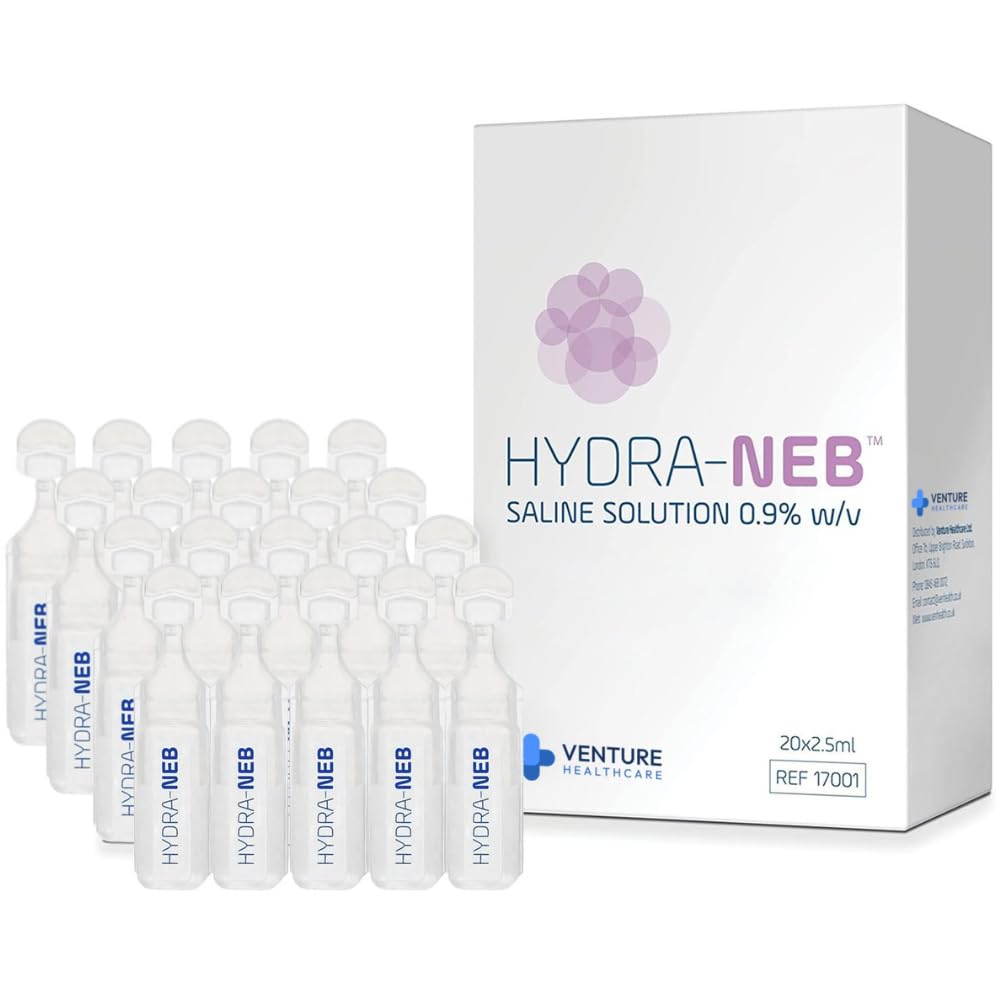 Seek medical attention if nasal symptoms are extreme, accompanied by fever, or persist past a typical viral course; recurring sinus infections, worsening facial pain, or blood in nasal discharge also benefit clinical analysis. However, persistent fever, extreme facial pain, or signs lasting past a typical course of viral illness warrant medical analysis somewhat than relying solely on saline methods. Saline drops are small vials or bottles that deliver tiny amounts of isotonic or mildly hypertonic solution, typically really helpful for infants and small youngsters because the drop format is straightforward to control. Beyond the essential saline solution, some over-the-counter products embody preservatives, buffering brokers, or hint minerals marketed as "sea salt" formulations; these could have an effect on shelf life, cost, what is hypertonic saline or sensation on use. Nebulised hypertonic saline may reduce the risk of hospitalisation by 13% compared with nebulised regular saline amongst infants who had been outpatients and people handled within the ED (danger ratio (RR) 0.87, 95% CI 0.78 to 0.97; 8 trials, 1760 infants; low-certainty proof). Saline sprays are often really helpful for short-time period relief of mild congestion or for common moisturizing during dry seasons; their convenience and portability make them a common alternative for commuters and travelers.


